REVIEW · PIRAN
From Trieste: Piran and Slovenia Coast Tour
Book on GetYourGuide →Operated by KoperTrips · Bookable on GetYourGuide
Piran feels like a postcard you can walk into. I love the Tartini Square moments with the bronze Giuseppe Tartini statue and the house/violin connection, and I also really like how the tour pairs coastal sightseeing with a proper food and wine tasting. One thing to consider: it’s a short, full-drive day, so you’ll want to be okay with a half-day pace and a bit of car time.
If you want quiet, clear guide audio the whole way, plan smart. A past passenger noted loud road noise in the back seats made it harder to hear the guide, so if you’re sensitive to that, try to request a spot where you’ll hear comfortably. Still, the overall experience runs with strong ratings (4.8 out of 5 from 116 bookings), and the guide-led storytelling is a big part of why people leave excited to come back.
In This Review
- Key Highlights You’ll Feel Right Away
- A Short Half-Day Coast Trip That Still Has a Story
- Getting There from Trieste: Pickup, Timing, and How the Day Moves
- Tartini Square: Why Piran Starts with Music and Marble
- Church of Saint George and the Narrow Streets That Feel Alive
- Portorož, Izola, and Koper: The Coast Without the Big Rush
- Sečovlje Salt Pans: The Working Coast You Don’t Want to Miss
- Food and Wine Tasting: What’s Included, and Why It Matters
- Guide Energy Makes the Difference: Dean, Erni, and Real Local Color
- Price and Value: Is $110 for 6 Hours a Good Deal?
- Who This Tour Is Best For (and Who Should Look Elsewhere)
- Should You Book This Trieste to Piran Coast Tour?
- FAQ
- Where does the tour pick you up in Trieste?
- How long is the tour?
- Is the tour in English?
- What’s included in the price?
- What is not included?
- Is there free cancellation?
- Is it possible to book without paying today?
- Is the tour wheelchair accessible?
Key Highlights You’ll Feel Right Away
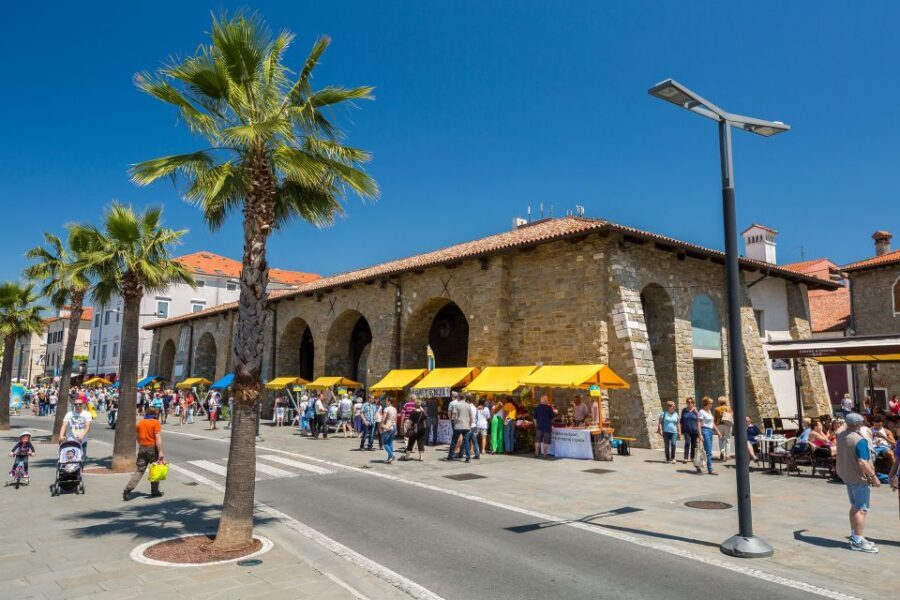
- Giuseppe Tartini in Piran: bronze statue at Tartini Square plus time tied to his house and one of his violins
- Saint George viewpoint: a classic panoramic stop that makes the old town click
- Scenic coastal drive: Portorož, Izola, and Koper from the road, with highlights explained as you go
- Sečovlje salt pans view: see the salt-working side of the coast and learn why it matters
- Local tasting included: wine plus local bites such as bread, cheese, fish, and prosciutto (depending on the day)
A Short Half-Day Coast Trip That Still Has a Story
This is the kind of day trip that works when you want more than a quick photo stop, but you don’t want to lose a whole day to transit. You start from Trieste, then you get a guided look at Slovenia’s coastal identity: the Venetian-era feel of Piran, the working coast of the salt pans, and the seaside towns in between. The best part is that it doesn’t treat the drive like filler. You’re moving, but the guide keeps linking what you see to the local past and everyday life.
I like that the tour is built around a few high-impact moments instead of trying to cram everything in. Piran gets the center stage, then you roll along the coast through places like Portorož, Izola, and Koper with a steady flow of context. By the time you return, you understand the coastline as something more than scenery.
There’s one practical trade-off: the whole loop is about 6 hours. That’s plenty for the big hits, but it’s not built for deep museum time or long shopping breaks. If you’re the type who wants extra hours in one town, you may end up wishing for one more stop—so keep your expectations aligned with a half-day format.
You can also read our reviews of more tours and experiences in Piran.
Getting There from Trieste: Pickup, Timing, and How the Day Moves
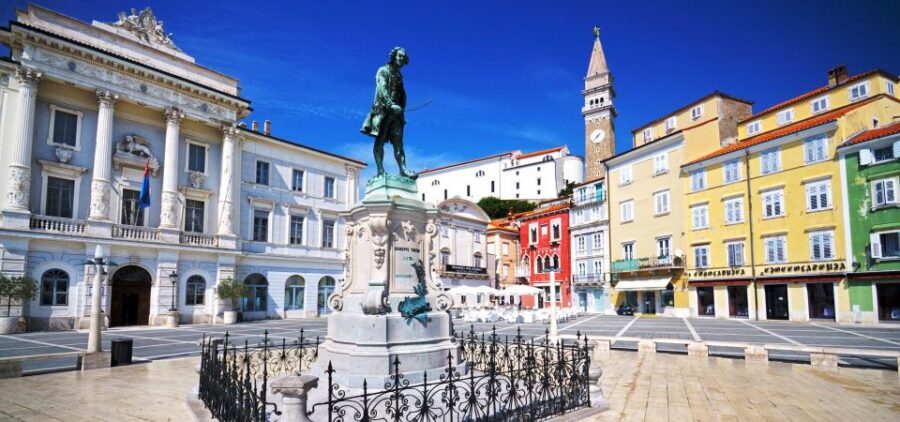
Pickup is simple, which matters when you’re starting your day already on someone else’s schedule. If you’re staying in a hotel in Trieste, the meeting point is in front of Hotel Savoia Excelsior Palace at Riva del Mandracchio 4, right by Piazza Unità d’Italia. If you’re arriving by cruise ship, pickup happens at the cruise terminal in Trieste where your ship docks.
The tour runs for 6 hours total with an English-speaking driver/guide, and it’s designed for private or small groups. Those two details matter more than they sound like they do. Small groups usually mean you’re less likely to feel rushed every 30 seconds, and an English guide means you don’t have to “guess” what you’re looking at—especially helpful in old towns where details can be easy to miss.
From a comfort standpoint, it’s still a road day. Even with frequent perspective stops, you’re sitting in the vehicle for parts of the route. If you’re sensitive to hearing the guide over traffic sounds, consider requesting seating where you can listen easily. One passenger specifically flagged loud road noise in the far back.
Tartini Square: Why Piran Starts with Music and Marble
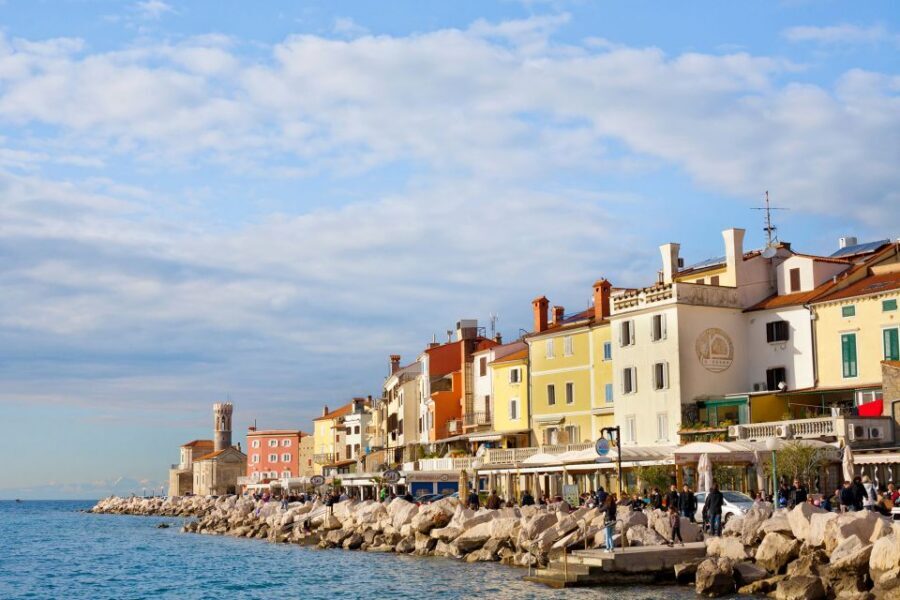
When you arrive in Piran, the tour doesn’t start with random landmarks. It starts with a person—Giuseppe Tartini, the famous composer and violinist. You’ll see the bronze statue of Tartini on Tartini Square, a spot that instantly sets the tone for the town. It’s Venetian-adjacent, visually dramatic, and it gives you a reason to look closely at what surrounds you instead of just scanning for Instagram angles.
Then comes the Tartini connection that goes beyond a quick statue photo. You’ll visit the house where he lived and you’ll be able to admire one of his violins. That’s one of the tour’s best “value per minute” moves: you’re not only sightseeing old streets, you’re getting a tangible link to the cultural identity of the place.
Around the square, you’ll also notice the majestic buildings that define Piran’s style—like the Municipal Palace and the Maritime Museum. Even if you don’t go inside every building, the exterior details help you understand why Piran looks the way it does: coastal city, maritime economy, old-world power, and a long memory.
Worth flagging: museum and aquarium entrance fees are not included. You’ll still see and appreciate the sights tied to those institutions, but if you want to step fully into any indoor exhibits, budget extra.
Church of Saint George and the Narrow Streets That Feel Alive
After Tartini Square, you shift from cultural landmarks to views and street-level wandering. The tour includes a stop at the Church of Saint George, which is a strong move because the viewpoint does two jobs at once. It gives you a panoramic sense of Piran’s shape and it helps you orient yourself before you start moving through the old town streets.
From there, you stroll through the compact core: narrow lanes, tight buildings, and streets that feel shaped by fishermen’s routines. One of the coolest visual details you’ll spot is the way fishing nets appear along the streets. It’s not just decoration; it’s a reminder that this is a working coast town, not a theme park.
You’ll also see the town’s compact architecture—small, close structures designed for dense living. It’s exactly the kind of place where a guide explanation pays off. You start understanding what you’re looking at: why streets curve, why buildings sit close, and why the town’s structure feels “coastal” rather than inland European.
How much free time you get matters here. The tour is timed so you can explore on your own after the guide-led stops. Past guests have said the time feels just right, which is exactly what you want on a half-day outing: guided context first, then freedom to enjoy the streets at your own pace.
Portorož, Izola, and Koper: The Coast Without the Big Rush
Once Piran fades into the rearview mirror, you don’t just drive until you reach the next checkmark. The tour continues with a scenic panoramic drive through Portorož, Izola, and Koper, with the guide pointing out key highlights and sharing local traditions along the way.
Here’s why this part is useful for you: you get an overall coastal picture in a way that self-guided travel can struggle with. If you try to do this on your own with buses or rental car time, you spend energy on timing and logistics. On this tour, the route is already built. You just enjoy the coastline and let the guide connect the dots.
- Portorož is where the coast’s resort side becomes obvious from the road.
- Izola carries a quieter, lived-in feel as you pass through areas tied to fishing and seaside life.
- Koper is the larger port presence on the route, and you’ll get local context about what makes it important.
The tour may not include long stop time in each town, but that’s part of the value. You’re not paying to rush. You’re paying to see a sequence of places that help you understand the whole coastline. If you’re hoping to linger in each town equally, this isn’t that style. But if you want the coast to make sense as a connected region, it’s a smart format.

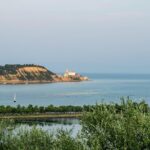

Sečovlje Salt Pans: The Working Coast You Don’t Want to Miss
Between the seaside towns and the return, you’ll make time for the natural salt pans of Sečovlje. You’ll be able to admire them from a coastal vista, and the guide will explain what you’re looking at and why it matters.
This stop is a great reminder that coast life isn’t only about pretty harbor views. Salt pans represent long-term human use of the environment—patterned landscapes created by industry and tradition. Even without a full-on “tour of the pans” format (entrance specifics aren’t listed in what you’re told to expect), the vista is still an eye-opener because it shifts your idea of what the coast is.
You also get a smoother emotional transition here. Piran is historic and poetic. The salt pans bring you back to the coast as a working economy. That balance makes the tour feel grounded, not just sightseeing.
Food and Wine Tasting: What’s Included, and Why It Matters
The included tasting is one of the big reasons this tour feels worth the price. You’re not just getting time and viewpoints. You’re getting a guided introduction to local food and wine traditions, which is where regional travel becomes memorable.
What you can look forward to is local food and wine tasting. One past guest described wine tasting paired with bread, cheese, fish, and prosciutto from the area. The exact menu can vary by day, but the focus stays the same: local, regional, and designed to be easy to enjoy without turning the day into a long meal.
This matters because it changes the way you experience the towns. When you taste regional products, you understand why certain foods fit a coastal setting. You also get a “downshift” in the schedule: a time to sit, breathe, and let the coast story land.
Just remember: other food and drinks beyond what’s specified aren’t included, so if you want extra beverages or a longer sit-down, you’ll need to pay separately.
Guide Energy Makes the Difference: Dean, Erni, and Real Local Color
This tour leans hard on the guide. The vehicle isn’t just transport; it’s a moving classroom with a personality. In the groups tied to recent departures, guides like Dean and Erni/Ernie have been praised for being engaging, organized, and genuinely enthusiastic about Slovenia.
That matters to you for a simple reason: Piran can look beautiful without explaining why it’s important. A good guide helps you connect the bronze statue to the town’s cultural identity, the Saint George views to how the town is arranged, and the salt pans to the coast’s long history of production. You’re not only seeing places—you’re learning what they mean.
You’ll also feel the human side. Guests have mentioned the guides talk in a friendly way and keep the group comfortable. That’s part of why the “small group or private” setup works well. You get information without feeling like you’re trapped in a lecture.
Price and Value: Is $110 for 6 Hours a Good Deal?
At $110 per person for about 6 hours, the value comes down to what’s included versus what you’d pay if you did it alone.
What you get here:
- hotel or port pickup and drop-off
- an English driver/guide
- food and wine tasting
- insurance
What costs extra:
- entrance fee for the museum and aquarium (if you choose to enter)
- other food/drinks not included in the tasting
If you tried to replicate this yourself, you’d pay for transportation, you’d lose the guided “why this place looks like this” context, and you’d still have to arrange a tasting experience. Here, the guide-led storytelling and tasting are packaged into the day. That packaging is exactly what helps the half-day feel complete.
Where the price can feel less ideal is if you’re the type who wants longer museum time in Piran or extra stops along the coast. One passenger felt Piran could have been longer and would have liked an extra village stop. That’s fair—this itinerary is built for balance, not expansion.
Who This Tour Is Best For (and Who Should Look Elsewhere)
This is a strong fit if you want:
- a guided introduction to Piran’s heritage and its Venetian-flavored character
- a short, manageable day trip from Trieste
- one standout cultural moment (Tartini) plus one great viewpoint (Saint George)
- a tasting that includes wine and regional bites
It’s also a good choice if you want an easier logistics day. Pickup is handled, timing is set, and the route is designed for seeing several key coastal areas in one go.
You might want to consider another option if:
- you’re hoping for lots of extra stops beyond Piran
- you want to spend major time inside museums and aquariums (since entrances aren’t included)
- you’re very sensitive to road noise and you end up seated far back (you may want a seat where you can hear the guide)
On the plus side, it’s listed as wheelchair accessible, so it’s designed with mobility needs in mind.
Should You Book This Trieste to Piran Coast Tour?
I’d book it if your goal is a half-day that feels meaningful: Tartini Square with Giuseppe Tartini’s story, panoramic Saint George views, a scenic coastal drive through Portorož, Izola, and Koper, and a Sečovlje salt pans stop paired with an included tasting. The structure is tight, which is exactly why it works. You don’t waste time wondering what to do next.
Don’t book it if you want a long, slow Piran day or you’re determined to do every indoor ticketed attraction. This is built for highlights, not for marathon exploration.
If you like stories told by a local guide and you want the coast to feel connected—historic Piran, resort towns, port influence, and salt-production reality—this one is a solid choice.
FAQ
Where does the tour pick you up in Trieste?
Hotel guests are picked up at a centralized meeting point in Trieste in front of Hotel Savoia Excelsior Palace (Riva del Mandracchio, 4), near Piazza Unità d’Italia. Cruise passengers are picked up at the cruise terminal in Trieste where the ship is docked.
How long is the tour?
The duration is 6 hours.
Is the tour in English?
Yes, the driver/guide is listed as English.
What’s included in the price?
Included items are hotel or port pickup and drop-off, the driver/guide, food and wine tasting, and insurance.
What is not included?
Entrance fees for the museum and aquarium are not included, along with other food and drinks not specified in the tasting.
Is there free cancellation?
Yes. You can cancel up to 24 hours in advance for a full refund.
Is it possible to book without paying today?
Yes. It offers a reserve now & pay later option, where you keep travel plans flexible and pay nothing today.
Is the tour wheelchair accessible?
Yes, the tour is listed as wheelchair accessible.