REVIEW · LJUBLJANA
Historic Ljubljana Tour with Ljubljana Castle included
Book on Viator →Operated by Ljubljana.info · Bookable on Viator
Ljubljana clicks into place fast. This private tour is designed as a time-saving highlights loop, with English explanations at each stop and a guide who can slow down or speed up as your group prefers. I particularly like that it’s anchored by a real local expert, Peter Mucnik, whose English is clear and whose pacing keeps the details from getting heavy. One thing to consider: it’s a walking tour with a real uphill moment at the castle, so comfortable shoes matter.
You’ll also get strong value because the route hits the sights you’d otherwise stitch together yourself, then finishes with Ljubljana Castle by funicular and a view from the top. I like that many stops are free, while a couple of admissions are handled for you, so you don’t spend the whole afternoon figuring out ticket lines.
In This Review
- Key things I’d bet you’ll care about
- Getting Oriented at Krekov trg (and why a private guide helps)
- Ljubljana Old Town on foot: cathedral, squares, and bridges with meaning
- Triple Bridge and the “why three bridges” moment
- Butcher’s Bridge and the Love-bridge angle
- Dragon Bridge: symbolism you can actually spot
- Central Market: a short stop that gives you local flavor fast
- St. Nicholas and the “doors you don’t want to miss” plan
- Vodnjak treh kranjskih rek and the Baroque way of telling a story
- Plečnik’s fingerprints: library, squares, and bridge design clues
- Town Hall and Church stops that add civic and faith context
- Finishing with Ljubljana Castle: funicular up, then tower views
- Price and value: what you’re really paying for
- Who should book this tour
- Should you book Historic Ljubljana Tour with Ljubljana Castle included?
- FAQ
- How long is the Ljubljana Old Town and Castle tour?
- Is this a private tour or a group tour?
- What language is the tour offered in?
- Where does the tour start?
- Which major admissions are included?
- Is the Cathedral of St. Nicholas admission included?
- Is there walking or climbing involved?
Key things I’d bet you’ll care about
- Private, your pace: you’re not stuck with a big group’s timing.
- Peter Mucnik’s explanations: crisp English, good context, and room for questions.
- Old Town plus art-and-architecture clues: squares and bridges explained like a story, not a checklist.
- Central Market time: a short, focused look at local produce and vendors.
- Castle finish with views: funicular up, then an actual lookout moment.
Getting Oriented at Krekov trg (and why a private guide helps)
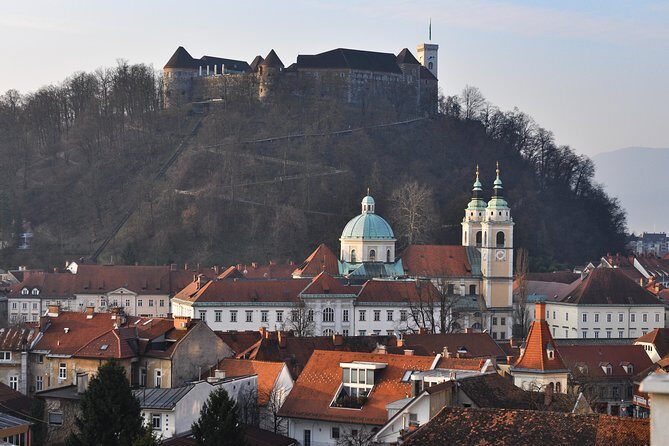
The tour starts at Krekov trg in Ljubljana’s center, and it ends back at the same meeting point. That matters more than you’d think, because the city’s core sights are spread along the Ljubljanica River and into a web of squares, bridges, and hilltop viewpoints. With a guide, you don’t waste time figuring out what to see first.
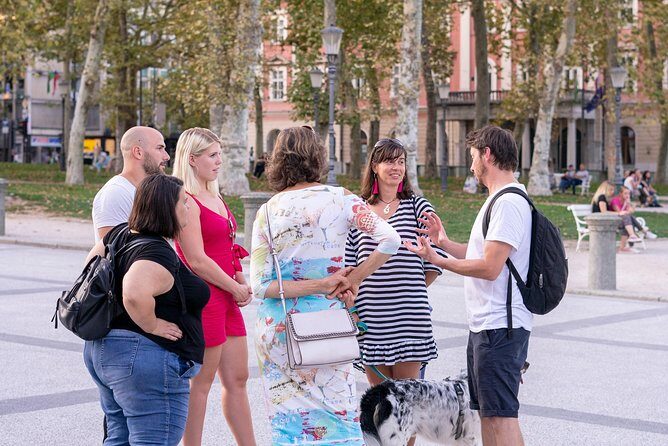
Being private also changes the feel. One person in your group can ask about church doors or bridge symbolism, while someone else might just want the quickest route between landmarks. That flexibility shows up in the way the tour is taught, too. The guide uses history and city design details to help you read what you’re seeing as you walk.
At about 3 hours, you get a full snapshot without feeling like you’re trapped outdoors all day. And because it’s offered in English with a mobile ticket, it’s generally a smooth “show up and go” kind of experience.
You can also read our reviews of more historical tours in Ljubljana
Ljubljana Old Town on foot: cathedral, squares, and bridges with meaning
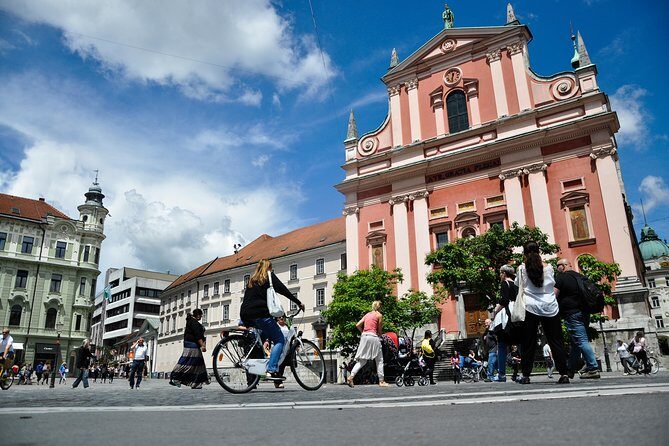
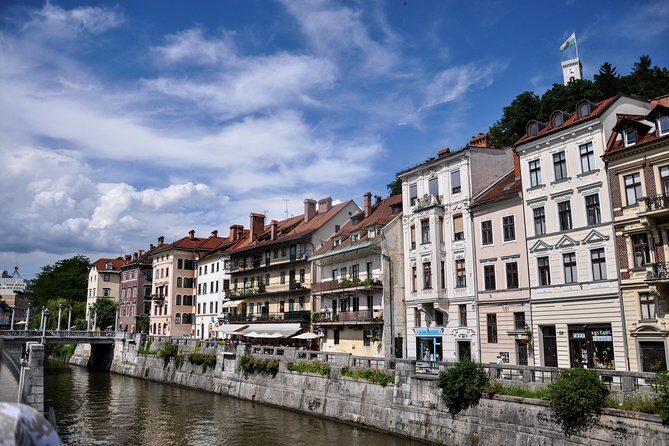
This is the heart of the tour: you move through Ljubljana Old Town and build a mental map while seeing the city’s signature sights. You’ll walk past (and learn the point of) landmarks that most first-timers notice right away, like the Ljubljana Cathedral and the baroque flourishes around it. But what makes this route feel different is the way the guide connects the buildings and statues to Ljubljana’s identity—river life, faith, commerce, and civic power.
Here’s what you’ll typically catch along the main walking stretch:
- Robba Fountain: a quick stop to notice the sculptural drama and the city’s taste for bold public art.
- Ljubljana Town Hall (Magistrat): you get outside views and also a look inside part of the building. Since city mayors have governed from this building since the late 1400s, it’s a rare chance to see civic power made physical.
- Cobblers’ Bridge (Cevljarski most): this one is small but fun because it turns into a lesson about medieval justice. The story ties to why the bridge existed where it did, with cheating merchants historically punished by being dipped in the river.
- The Ljubljanica River corridor: instead of treating the river as scenery, the tour uses it as the explanation for why Ljubljana looks and feels the way it does.
- Congress Square and Star Park: you’ll see key institutions around the square and hear why the name stuck. If you like architecture and the role of universities and orchestras, this section is a good match.
- Preseren Square: you get a view over the river bridges and the Franciscan Church area, plus the big focal point of France Prešeren’s statue. The guide also connects the statue to Slovenian literature and the poet’s story.
Then the bridges come in like a themed highlight reel.
Triple Bridge and the “why three bridges” moment
Triple Bridge (Tromostovje) is one of Ljubljana’s most recognizable landmarks, and the tour explains its purpose and symbolism. You’ll learn why there aren’t simply one or two bridges here, and how architect Jože Plečnik built meaning into the design. Even if you’re only walking through quickly, the guide helps you see it as more than a photo spot.
Butcher’s Bridge and the Love-bridge angle
You’ll also reach Butcher’s Bridge. Today it’s known as a love-lock bridge, but the name comes from its older role and the statues placed there. This stop works best if you enjoy a bit of street-level storytelling—how a place’s name can stick even as the modern use changes.
Dragon Bridge: symbolism you can actually spot
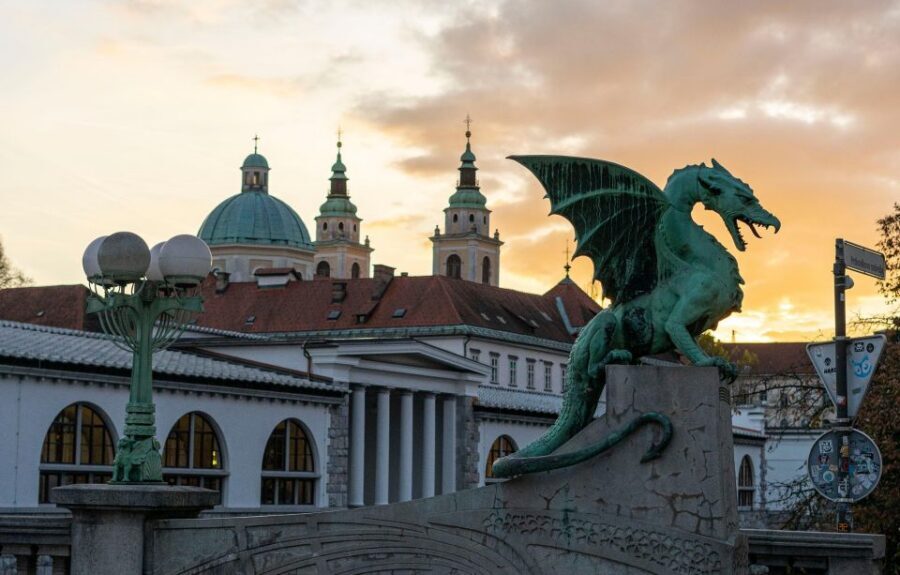
Finally, you’ll hit Dragon Bridge (Zmajski Most). The guide points out why a dragon matters for Ljubljana and ties it back to Art Nouveau design choices. If you like noticing motifs on buildings and bridges, you’ll leave with a sharper eye.

Central Market: a short stop that gives you local flavor fast
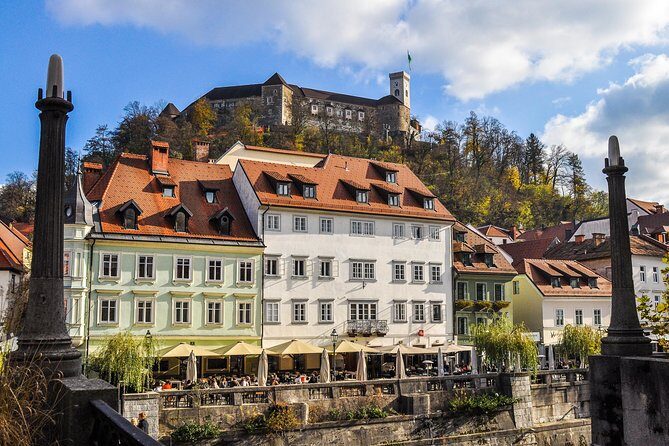
The Central Market stop is brief—around 10 minutes—but it’s a high-return moment. You’re seeing the city’s food culture in a concentrated way, from produce to dairy, meats, bread, oils, juices, and even flowers. The key practical point: this isn’t just a sightseeing detour. It’s a fast look at the way locals shop and what they prioritize.
The tour also explains that the market has operated on this site for about 120 years, which helps you understand why the stalls feel permanent rather than temporary. Plus, the market admission is handled as part of the experience, which keeps this segment easy.
If you want to buy snacks for later, you might find it easier to do it here than trying to hunt for the right place on your own during a walk. Just know it’s quick, so don’t plan on turning this into a full food tour.
St. Nicholas and the “doors you don’t want to miss” plan
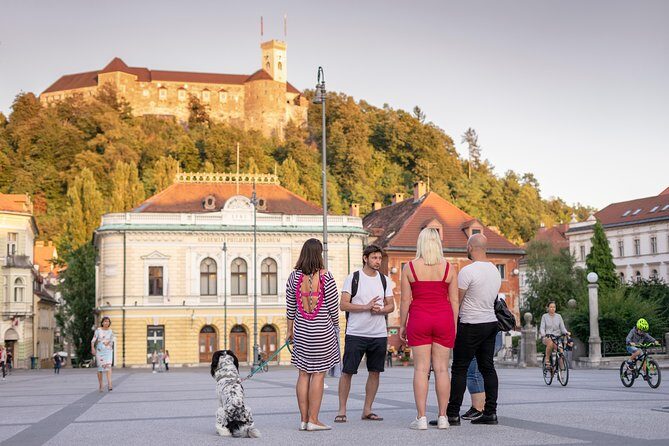
At St. Nicholas Cathedral, the tour focuses on the famous sculpted doors, often called the Slovenian door and the Ljubljana door. These are described as masterpieces of sculpture that represent Christianity’s story in Slovenia.
Important note for planning: the doors’ admission is not included, even though you’re there for the highlights. So if you’re the type who hates paying surprise ticket fees mid-tour, it’s worth mentally expecting an extra cost here.
Even with that caveat, this stop is a good fit for anyone who likes art with clear symbolism. You’ll get context before you look closely, which makes the sculpture easier to read.
Vodnjak treh kranjskih rek and the Baroque way of telling a story
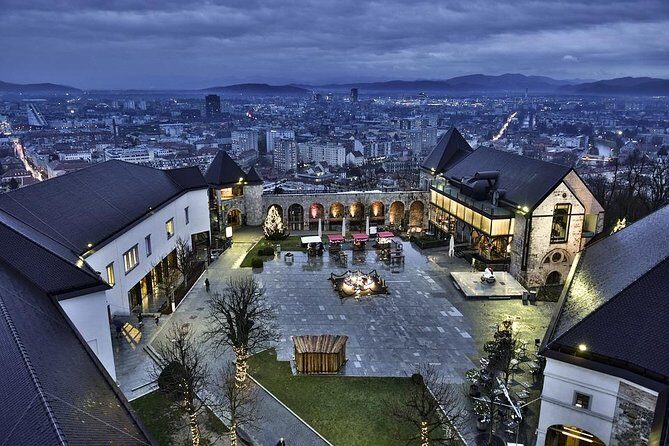
A short stop brings you to Fountain of Three Carniolan Rivers (Vodnjak treh kranjskih rek). The beauty here is in the details and the idea behind it—baroque fountains weren’t made just for water. They were made to communicate power, geography, and identity in stone and water.
Because you’re only stopping briefly, this works as a reset point in the route: you pause, you look up, you absorb the baroque style, and then you move on with a better sense of what Ljubljana tends to do with public spaces.
Plečnik’s fingerprints: library, squares, and bridge design clues
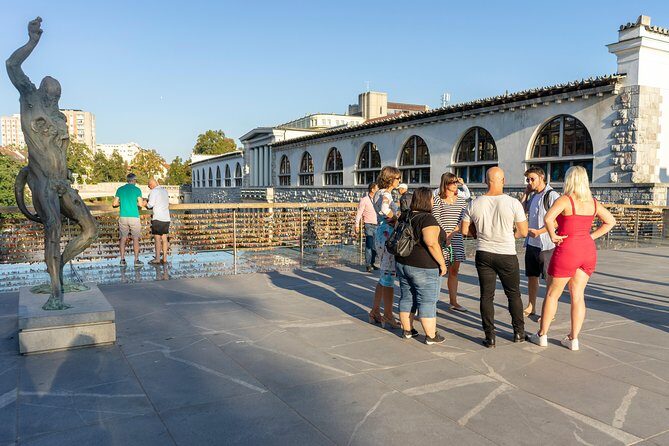
Ljubljana’s modern identity is tightly linked to architect Jože Plečnik, and this tour makes sure you notice his influence instead of just seeing pretty buildings. You’ll pass the National and University Library and get the “why this building matters” explanation—framed as a temple of knowledge with strong architectural symbolism.
You’ll also visit French Revolution Square (Trg Francoske Revolucije), where the guide shares multiple historical threads: Teutonic knights and monastery links, Napoleonic-era references including the Illyrian Provinces, and Plečnik as the architect shaping how you experience the square today.
And there’s the rhythm of it all: you walk, you see a feature, you hear what it’s for, and then you keep going. That’s what turns a list of landmarks into a real understanding of how Ljubljana’s spaces connect.
Town Hall and Church stops that add civic and faith context
Two quick but meaningful religious/civic stops round out the “city logic” of the tour.
- Town Hall (Magistrat): you see it from the outside and part of it from the inside. Since Ljubljana mayors have governed from this building since the late 1400s, it’s a direct link between today’s city and the city’s governance past.
- Franciscan Church (Franciskanska cerkev): you’ll spot its pink facade and hear the comparison to Il Gesu in Rome. It’s a short stop, but it adds a clear visual style anchor.
These are the moments that help the tour feel more grounded than just sightseeing. You’re learning how Ljubljana’s civic power and faith sites sit in the same pedestrian network as markets and river crossings.
Finishing with Ljubljana Castle: funicular up, then tower views
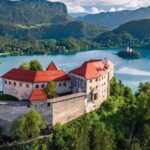
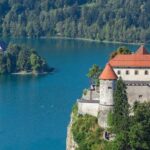
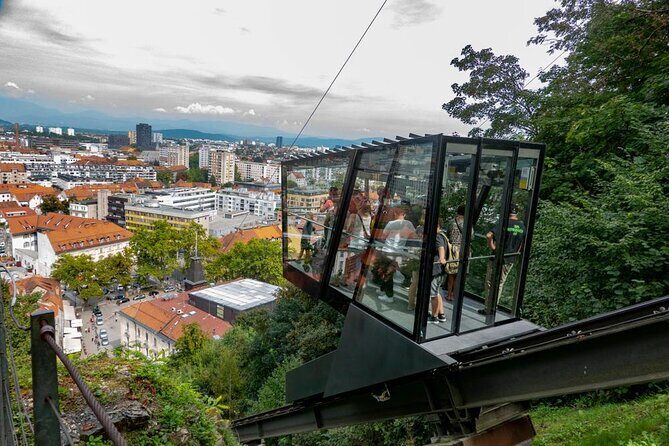
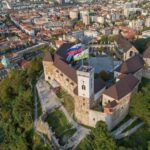
The tour’s ending is the one most people remember: Ljubljana Castle. You take the castle railway funicular up the hill, which is a practical win because it saves your legs for the viewing portion.
Once you’re there, you learn the castle’s background and what it has served since it was built at the end of the 15th century. Then comes the part to plan for: you climb to the viewing tour for wide views above Ljubljana and Slovenia. One review specifically called the climb the most physical piece of the whole tour, so if you’re traveling with anyone who hates stairs, build in a slower pace.
The castle finish makes the earlier walking feel worth it. From above, those bridges you saw—Triple Bridge, Butcher’s Bridge, Dragon Bridge—make more sense. The river course and old-town layout snap into place.
Price and value: what you’re really paying for
At $108.37 per person for about 3 hours, the value comes from a few specific things:
- It’s private, so you’re paying for your guide’s attention rather than splitting time across a crowd.
- Several stops are free, so the price is largely paying for interpretation and direction.
- Admissions are partly handled: Central Market entry is included, and Ljubljana Castle (including the funicular ride to the top and the castle viewing) is included.
- The guide—Peter Mucnik—has a track record of clear communication and a pace that doesn’t drown you in details.
One more practical point: the experience is often booked ahead. The average booking window is about 68 days, which usually means you shouldn’t wait until the last minute if you want a specific time slot.
Who should book this tour
This is a great choice if you want:
- A high-efficiency orientation to Ljubljana’s Old Town on foot
- Strong “storytelling” around architecture, sculptures, squares, and bridges
- A private guide who can answer questions without turning it into a rushed herd
It’s also a good fit for couples, solo travelers, and small groups who prefer a clear plan over roaming. If you love photos, you’ll get plenty, but the bigger win is understanding what you’re photographing.
The only real mismatch I’d flag is if anyone in your group has limited comfort with stairs or hill climbs. The funicular helps a lot, but the final viewing climb still exists.
Should you book Historic Ljubljana Tour with Ljubljana Castle included?
If your goal is to get your bearings fast and leave Ljubljana with both a map in your head and a set of meaningful landmarks remembered, I’d say yes. The combination of Old Town walking, key architecture and bridge symbolism, and a castle finish with views hits the best blend of city overview and payoff.
I’d book it especially if you want a guide like Peter Mucnik who manages the details well—thorough enough to make the places click, but paced so you don’t feel overloaded. Just choose your departure time with an eye on your priorities, since a later afternoon start can mean some nearby shops aren’t a focus by the time you arrive.
FAQ
How long is the Ljubljana Old Town and Castle tour?
It runs for about 3 hours.
Is this a private tour or a group tour?
It’s a private tour. Only your group participates.
What language is the tour offered in?
The tour is offered in English.
Where does the tour start?
The meeting point is Krekov trg, 1000 Ljubljana, Slovenia. The activity ends back at the same meeting point.
Which major admissions are included?
Central Market entry is included, and Ljubljana Castle is included with the funicular ride to the top and access to the castle’s viewing area.
Is the Cathedral of St. Nicholas admission included?
No. The stop includes the two sculpted doors, but admission is not included.
Is there walking or climbing involved?
Yes. It’s a walking tour through the Old Town, and the castle portion includes a climb to the viewing tour at the top.