REVIEW · LJUBLJANA
Trieste: Ljubljana Capital of Slovenia Tour
Book on GetYourGuide →Operated by KoperTrips · Bookable on GetYourGuide
Ljubljana bends old and new into one walk. This tour is interesting because you’ll move from river-side design to medieval views, guided in English with a live local. I love the way you spot Jože Plečnik everywhere, especially on the bridges and squares, and I love the funicular ride up to the Ljubljana Castle viewpoints.
One possible drawback: if your group ends up seated farther back during any ride/transfer, you may catch less of the guide’s commentary. I’d plan to face the front when you can, and ask questions early so you don’t miss the story.
If you like cities that feel walkable and human-scale, you’ll enjoy how Ljubljana mixes major monuments with an easygoing pace, without needing a car.
In This Review
- Key things to know before you go
- Ljubljana feels like a capital you can actually enjoy on foot
- Jože Plečnik’s Ljubljana: bridges and squares with a point
- Triple Bridge and Shoemakers’ Bridge: why these aren’t just pretty
- Town Hall, Robba Fountain, and the art of reading city center details
- Ljubljana Cathedral and Prešeren Square: the center’s daily heartbeat
- Congress Square and the rest of the old-town circuit
- The Ljubljana Dragon: spotting symbols while you walk
- Up the hill by funicular: your quickest route to real city views
- The 6-hour pace and how the $110 price makes sense
- What to wear and how to handle the practical stuff
- English guide, wheelchair accessible, and a note on group comfort
- Who this tour suits best
- Should you book this Ljubljana tour?
- FAQ
- How long is the Trieste to Ljubljana Capital of Slovenia tour?
- What is the price per person?
- What’s included in the tour ticket?
- Is the funicular ticket included?
- Are meals and beverages included?
- What language is the tour guide speaking?
- Is the tour wheelchair accessible?
- What should I wear?
- Is there free cancellation?
Key things to know before you go
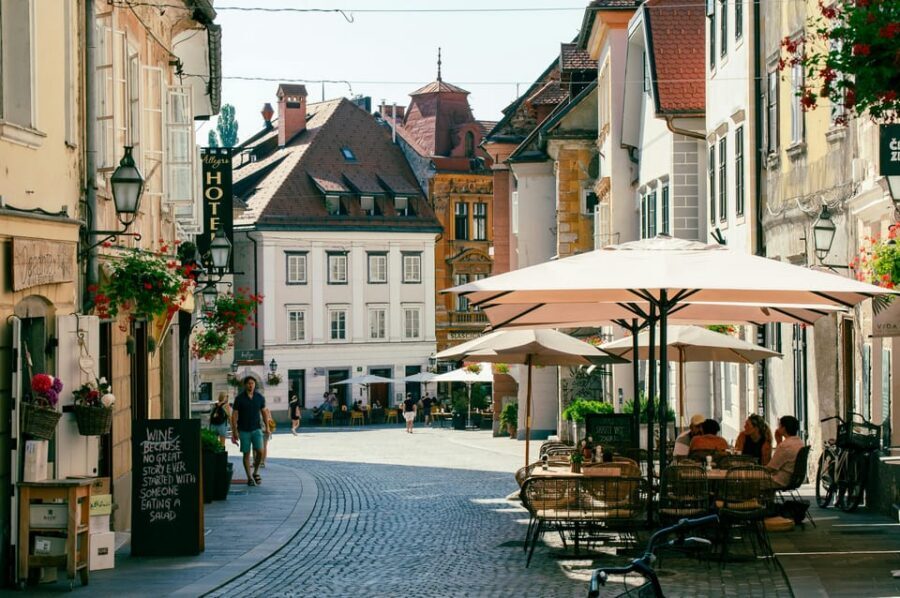
- Jože Plečnik’s fingerprints: Bridges and public spaces shaped around the river Ljubljanica.
- Big-photo spots in a short time: Triple Bridge, Shoemakers’ Bridge, Ljubljana Cathedral, and Prešeren Square.
- Castle views without a long climb: A funicular ticket takes you to Castle Hill plus admission.
- Ljubljana Dragon symbolism: Look for the dragon on the castle tower and at Dragon Bridge.
- Guides vary by experience: Some guides (like Ernest and Dean) are praised for clarity and availability.
Ljubljana feels like a capital you can actually enjoy on foot
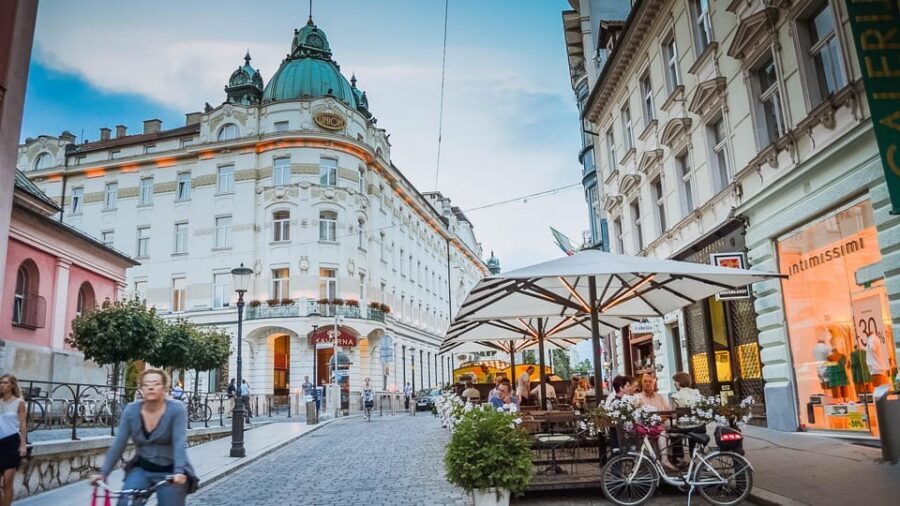
Ljubljana is Slovenia’s capital, and it’s the kind of place where the city center doesn’t swallow your whole day. The strongest feeling happens along the river Ljubljanica, where old architecture and modern city life sit side by side.
On this tour, you’re not just ticking off landmarks. You’re learning how the city’s layout and design choices guide your eyes—toward bridges, town squares, and viewpoints—so walking feels purposeful.
You can also read our reviews of more tours and experiences in Ljubljana.

Jože Plečnik’s Ljubljana: bridges and squares with a point
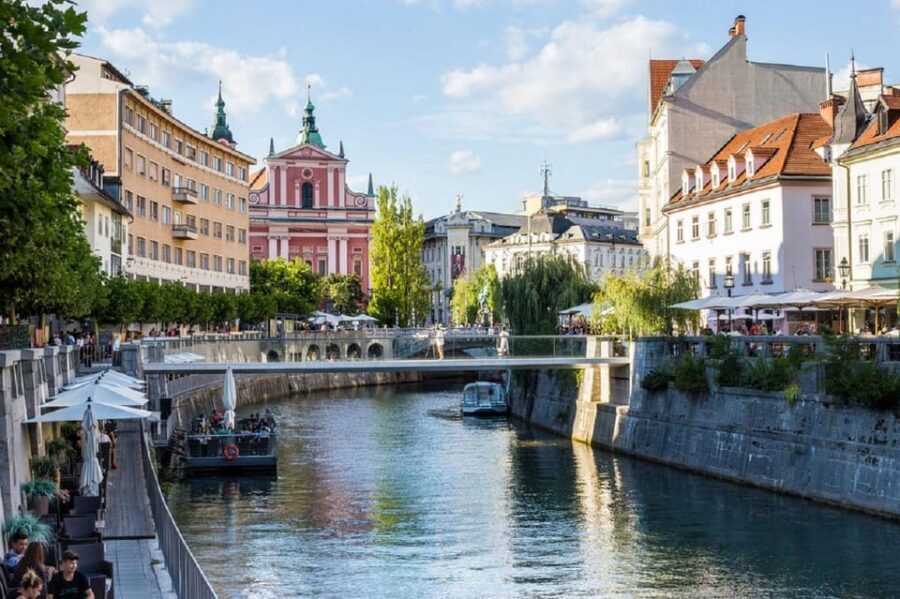
A big reason this tour works is that it gives you a theme: the influence of Slovene architect Jože Plečnik. In a little more than three decades, he transformed Ljubljana from a provincial town into the capital of the Slovene nation, reshaping the public spaces you’ll walk through.
His impact is most noticeable along the river Ljubljanica. That matters because you get more than a list of buildings—you start seeing connections: how bridges and embankments shape movement, how squares become social stages, and how the city’s center turns into a flowing route.
When you reach Plečnik’s sights, watch for the way details repeat. You’ll notice the city planning rhythm: stone, water, and passageways all reinforcing each other.
Triple Bridge and Shoemakers’ Bridge: why these aren’t just pretty
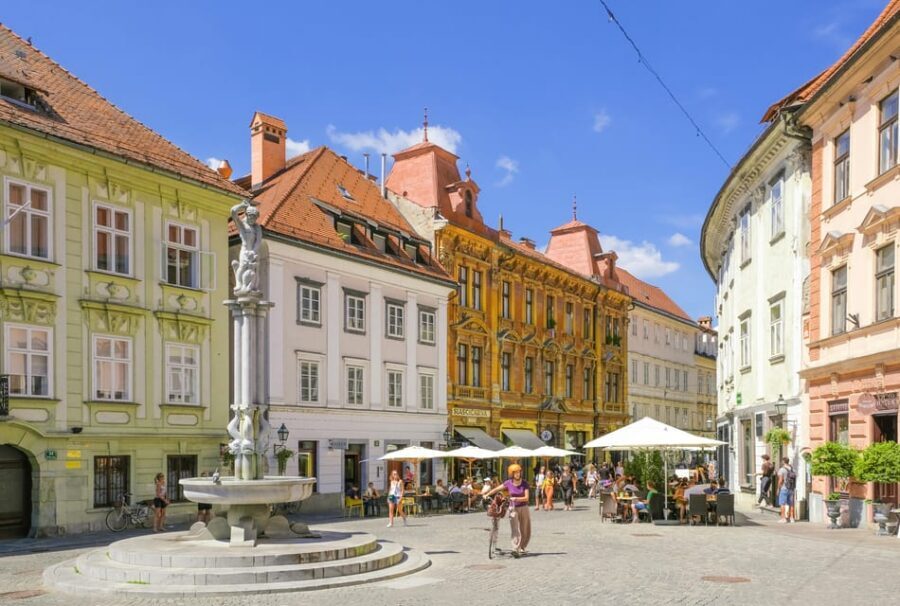
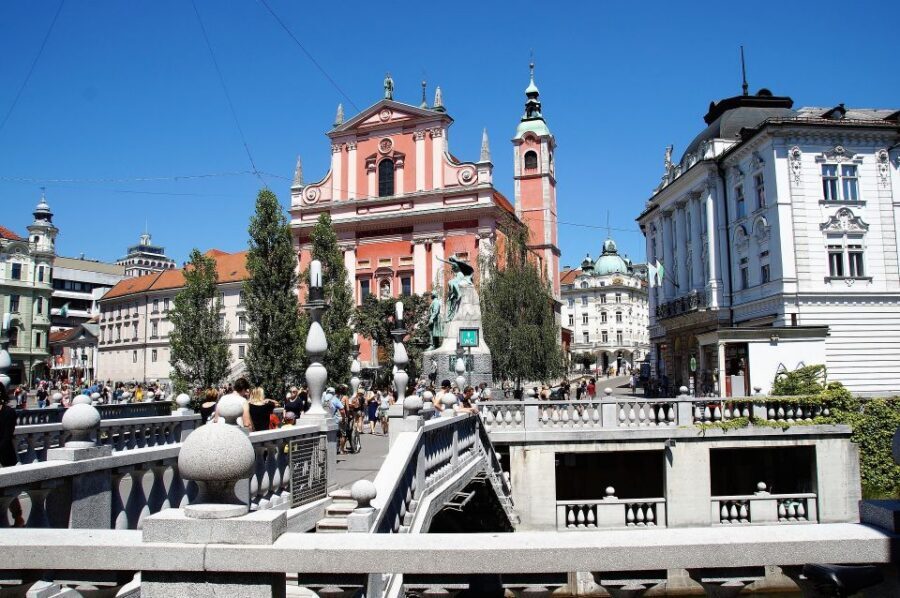
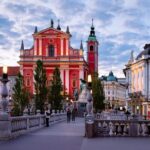
You’ll see the Triple Bridge and the Shoemakers’ Bridge as part of the old town walk. These aren’t random walk-by objects. They’re practical city connectors over the river, and they also serve as visual landmarks that help you orient yourself.
The Triple Bridge is worth your attention because it creates a multi-level crossing feel without turning the river into a barrier. The Shoemakers’ Bridge adds another classic Ljubljanica moment, giving you a strong sense of how the river structures pedestrian life.
Here’s the practical takeaway: if you’re someone who likes photographing architecture, these bridges give you angles in multiple directions, with river reflections as a bonus when the weather cooperates.
Town Hall, Robba Fountain, and the art of reading city center details
A few of Ljubljana’s key monuments sit close enough to feel like one continuous “open-air room.” You’ll pass the Ljubljana Town Hall, and you’ll also see the Robba Fountain, one of the most recognizable pieces in the center.
Robba Fountain is one of those stops that rewards slowing down. Instead of rushing to the next place, I like using it as a reset point—stand, look, then re-enter the walk with a better sense of scale. You’ll also notice how the fountain and surrounding squares create natural pauses, the kind that make a city feel lived-in.
Then you’ll move on to other central landmarks, and the story stays consistent: Ljubljana’s design is meant for people who stroll, sit, and meet.
Ljubljana Cathedral and Prešeren Square: the center’s daily heartbeat
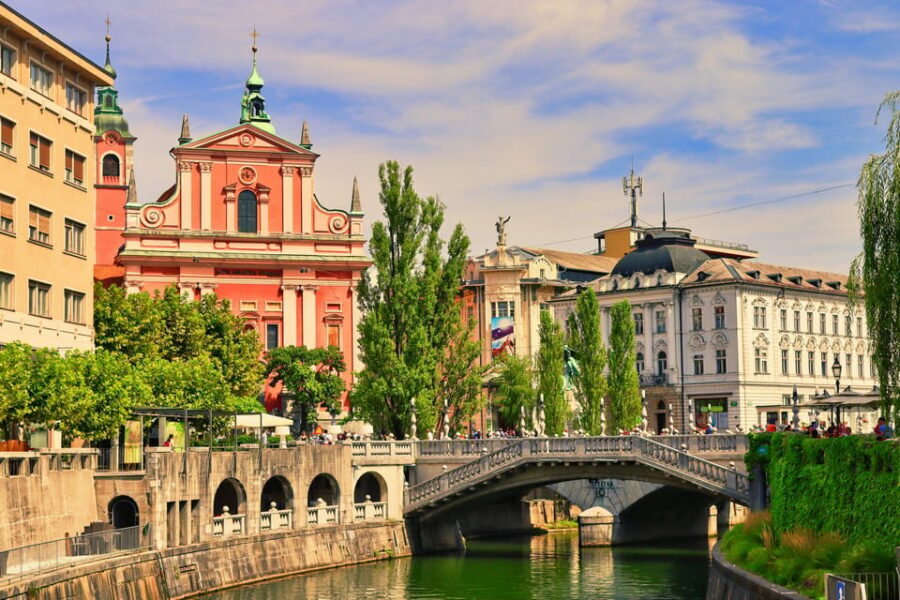
You’ll visit Ljubljana Cathedral and Prešeren Square, both major anchors in the old town. Even if you’re not a church-aficionado, this area works because it pulls you into the everyday rhythm of the city center.
Prešeren Square is a good place to notice how a landmark square functions. It’s not only about architecture. It’s about gathering space—where people linger, where the view lines matter, and where the city’s symbolic energy feels strongest.
At the cathedral area, you’ll get a sense of Ljubljana’s ability to mix the ceremonial with the ordinary. One moment you’re looking at monumental architecture; the next, you’re walking back into river-side life with the same ease.
Congress Square and the rest of the old-town circuit
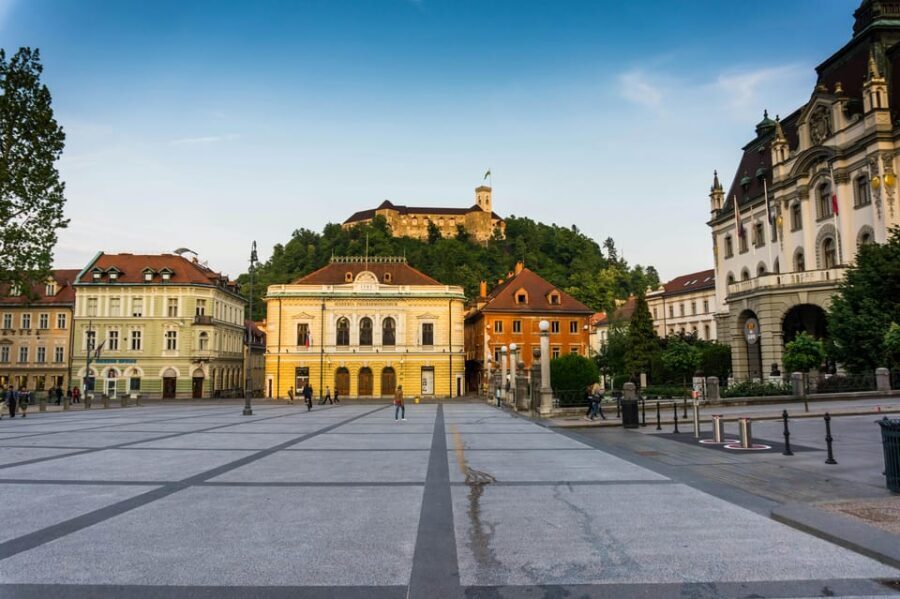
This tour also includes stops around Congress Square and other central attractions. The value here is that you see multiple layers of the city in a compact loop, rather than doing separate, scattered visits on your own.
In a day like this, I like having the route organized for me. Ljubljana rewards walking, but you don’t always want to spend your energy figuring out where each monument fits into the bigger picture.
The Ljubljana Dragon: spotting symbols while you walk
One of Ljubljana’s easiest symbols to catch is the Ljubljana Dragon. It’s shown on top of the Ljubljana Castle tower, and it’s also linked to the Dragon Bridge crossing the Ljubljanica.
This is a small detail, but it helps your brain stitch the day together. When you can connect where you are now to the castle viewpoint you haven’t reached yet, the walking route feels more intentional and satisfying.
If you’re taking photos, try to include at least one dragon reference. It’s one of those things that looks better when you can compare locations.
Up the hill by funicular: your quickest route to real city views
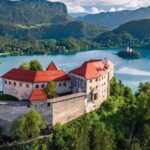
The tour ends with the Castle Hill climb via funicular. That’s a practical choice, and it’s also part of the experience: you’re not spending your energy on stairs when the payoff is a viewpoint.
With your funicular railway ticket and Ljubljana Castle admission included, you get a smooth transition from river-level city walking to higher-ground perspective. From the castle area, you’ll be able to take in the region’s layout and understand how the city’s design connects back down to the river.
What I’d watch for during the view time is how Ljubljana’s center concentrates around the Ljubljanica. When you look down from above, the bridges and waterways stop feeling like isolated photo stops and start looking like the city’s backbone.
The 6-hour pace and how the $110 price makes sense
At $110 per person for about 6 hours, this isn’t a “cheap bus ride” kind of deal. You’re paying for a guided walk, plus two key value items: Ljubljana Castle admission and the funicular to Castle Hill.
If you planned this alone, you’d still spend time traveling between sights, and you’d still likely need to purchase the same entry and transport tickets. The guide’s job is to compress your learning and help you see what’s relevant, not just what’s there.
That said, your enjoyment will depend on how much commentary you actually get. Some guests have praised guides like Ernest and Dean for being professional, available, and clear with explanations. On the flip side, if you get a more “driver-like” delivery or you’re seated in a spot where audio is hard to catch, the experience can feel less informative than you expected.
What to wear and how to handle the practical stuff
This tour is heavy on walking, so wear comfortable shoes. Ljubljana’s center is made for strolling, but you’ll still want soles that don’t betray you after a couple hours.
Also check the weather before you go and dress for it. A sudden rain changes the feel of outdoor squares and river views quickly.
Keep belongings secure in crowded areas. This is standard city sense, but it’s worth repeating because the busiest zones line up with the most photogenic parts of the walk.
English guide, wheelchair accessible, and a note on group comfort
The tour runs with a live English-speaking guide and is wheelchair accessible. That’s a big plus if you need predictable access to major sights without planning your own stair-heavy route.
If you’re sensitive to sound, consider that group layout can matter. One guest noted difficulty hearing from farther back, so if you spot an opportunity to sit closer to where the guide is speaking, it can help.
Who this tour suits best
I think this is a good match if you want a focused introduction to Ljubljana without building your own circuit. You’ll like it if you care about architecture and city design, especially Plečnik’s influence on bridges and public spaces.
It’s also a solid choice for first-timers who want the big landmarks—Town Hall, Triple Bridge, Shoemakers’ Bridge, Cathedral, Robba Fountain, Prešeren Square—plus the castle payoff with minimal effort.
If you hate guided tours and prefer freedom above all, you might find the structure limiting. But if you want your walking to come with context, this is built for you.
Should you book this Ljubljana tour?
I’d book it if you want a guided Ljubljana day that includes castle admission and the funicular, plus a coherent theme built around Plečnik’s city design. The route makes sense, the sights are concentrated, and the castle viewpoint gives your walking a satisfying finish.
I’d think twice if you’re expecting deep, nonstop narration in every moment. Delivery can vary, and seating position can affect how much you hear. If you value clear explanations, arrive ready with questions and don’t hesitate to ask the guide to slow down on the stops that interest you most.
If you want Ljubljana as a well-told story—river first, then bridges, squares, and finally the castle—this tour is a practical way to get there.
FAQ
How long is the Trieste to Ljubljana Capital of Slovenia tour?
The tour lasts about 6 hours.
What is the price per person?
The price is listed as $110 per person.
What’s included in the tour ticket?
You get a guided tour of Ljubljana, admission to Ljubljana Castle, and a funicular railway ticket to Castle Hill.
Is the funicular ticket included?
Yes. The tour includes a funicular railway ticket to reach Castle Hill.
Are meals and beverages included?
No. Meals and beverages are not included.
What language is the tour guide speaking?
The live tour guide speaks English.
Is the tour wheelchair accessible?
Yes, it is listed as wheelchair accessible.
What should I wear?
Wear comfortable walking shoes, since the tour involves a lot of walking.
Is there free cancellation?
Yes. You can cancel up to 24 hours in advance for a full refund.