REVIEW · LJUBLJANA
Ljubljana private walking tour with a local
Book on Viator →Operated by Ljubljana.info · Bookable on Viator
Ljubljana makes sense when you walk it. This private, English-speaking Old Town tour is built to connect the dots between daily life, old power structures, and the bridges you keep passing—until they mean something.
I like that you get a personal guide who can steer the walk toward what you care about, whether that’s church art, market life, or the stories behind the river crossings. I also like how the timing works: about 2 hours for a tight loop that still leaves room for questions. One thing to keep in mind: some stops are quick, and not every entrance is included—so if you want lots of time inside, you may feel a little rushed.
In This Review
- Key Highlights You’ll Feel on This Walk
- Why A Private Walk Makes Ljubljana Click
- Meeting Point, Timing, and How the 2-Hour Loop Works
- Central Market to Cathedral Doors: Daily Life Meets Art History
- Robba Fountain, Town Hall, and the Bridge-Edge of Medieval Law
- National and University Library: Reading Architecture Like a Clue
- Squares With Big Stories: French Revolution Square and Congress Square
- Preseren Square and Triple Bridge: The River Crossing That Explains the City
- Franciscan Church, Butcher’s Bridge Locks, and Dragon Bridge Symbolism
- What $78.64 Buys You in a Private Old Town Walk
- Who Should Book This Tour (and Who Might Skip It)
- Should You Book This Ljubljana Private Walking Tour?
- FAQ
- How long is the private walking tour?
- What does the tour cost per person?
- Is this tour private or group-based?
- Is the tour offered in English?
- Where does the tour start and where does it end?
- Are entrance tickets included for stops?
Key Highlights You’ll Feel on This Walk
- A true private format: only your group, so questions and pacing stay yours
- Central Market stop (with a ticket included) where the food scene is about more than sightseeing
- Cathedral door details explained clearly, including the two famous sculpted doors
- Jože Plečnik architecture is woven through the walk, especially at the bridges
- Bridges as history lessons, from medieval “punishment” stories to the dragon symbol
Why A Private Walk Makes Ljubljana Click
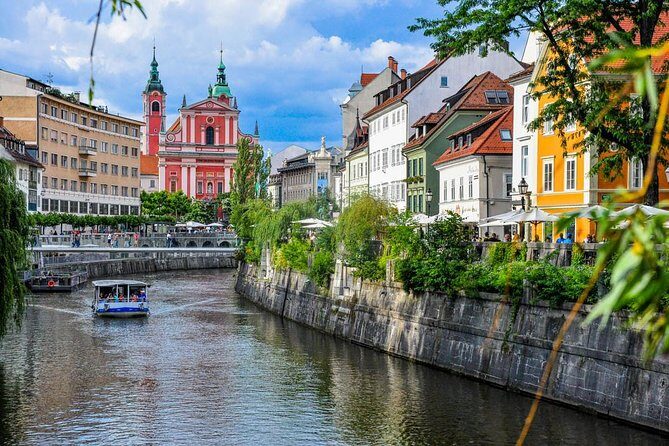
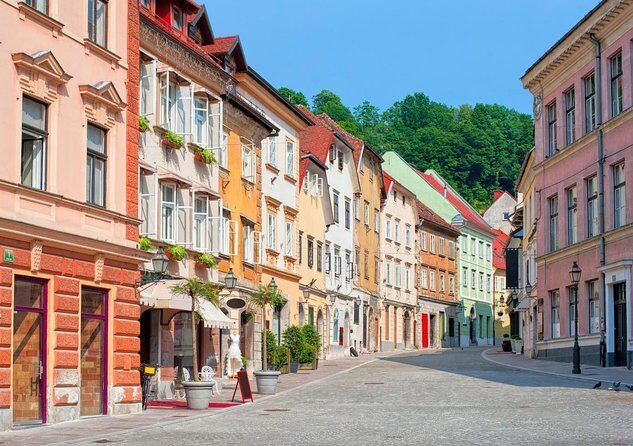
Ljubljana is the kind of city where the small stuff matters: a fountain, a doorway, a bridge edge, the way the river shapes where people live and work. On this private walking tour, your guide ties those pieces together so you’re not just collecting landmarks. You’re learning the logic of the place.
The biggest advantage is flexibility. Since it’s private, you can nudge the route toward your interests—history, architecture, or cultural habits you’ll actually recognize later while you’re eating and wandering on your own. This matters in a compact Old Town, where you can easily miss context if you’re doing it solo.
Also, the guide you get can change the texture of the experience. Names that have led groups here include Peter and Milos, and the common thread in the feedback is a friendly, conversation-ready style and a willingness to answer questions without turning the walk into a lecture.
You can also read our reviews of more walking tours in Ljubljana

Meeting Point, Timing, and How the 2-Hour Loop Works
The tour starts at the Mouse Fountain area (Center District, 1000 Ljubljana) and ends at Prešernov trg 1. You’ll get the move-and-watch rhythm quickly: short stops, then walking again, all within the old core of the city.
A key practical point: even though it’s “just a walk,” it’s not a random stroll. The stops are spaced to keep energy up and attention sharp. It’s ideal if you’re trying to get your bearings fast and want a foundation for the rest of your Ljubljana time.
What to do to make the most of it:
- Wear shoes you’re happy to stand in; you’ll be on your feet for the full loop
- Bring a short list of what you want most (bridges, food, churches, architecture) so your guide can steer the time
- If it’s hot or rainy, dress for weather; you’ll still be outside between stops
Central Market to Cathedral Doors: Daily Life Meets Art History
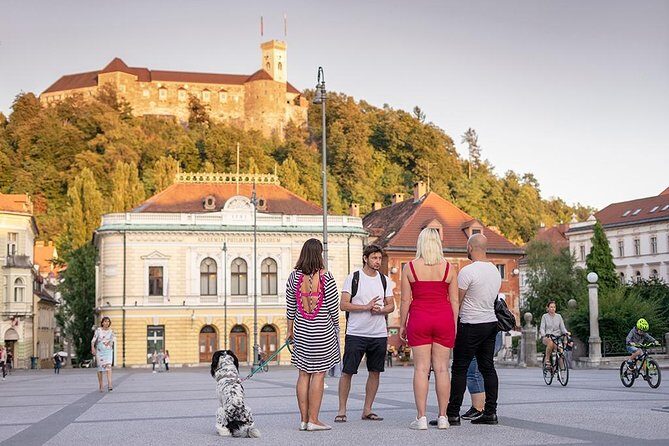
The walk begins where locals actually shop and talk with their hands: the Central Market. This spot has operated on the same site for about 120 years, so it’s not a staged market. You’ll see merchants and the goods they sell—from produce and dairy to meat, bread, oils, juices, and flowers. One detail that sticks with people is how modern some of the everyday setup can feel, like the milk machine you can spot at the market.
This stop is valuable because it grounds the rest of your sightseeing. You start to understand that Ljubljana’s Old Town isn’t only buildings—it’s daily routines. You’ll also pick up the sense of Slovenia’s regional produce and the push toward more ecological products, without turning it into a lecture.
Next comes St. Nicholas Cathedral, where the focus shifts from buying food to reading sculpture. The highlight is the pair of famous doors: the Slovenian door and the Ljubljana door. Your guide explains what they represent and how they connect to the history of Christianity in Slovenia.
A drawback to plan around: the cathedral admission ticket is not included. If you’re hoping to go inside and spend extra time, budget a little extra or ask your guide how much access is practical during the stop.
Robba Fountain, Town Hall, and the Bridge-Edge of Medieval Law
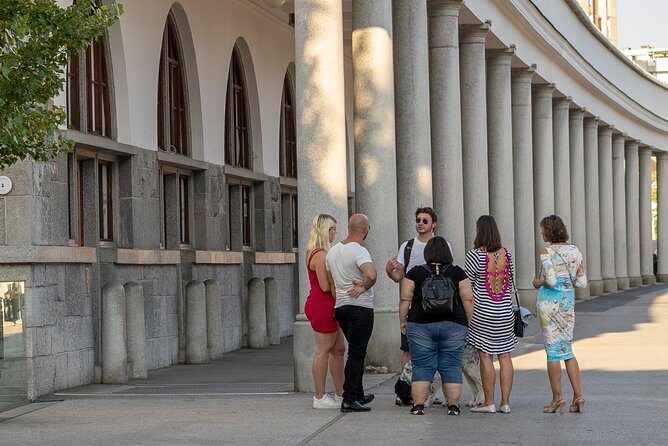
Between the cathedral and the civic center, you’ll hit the kind of landmark Ljubljana does well: small but story-packed.
First is the Fountain of the Three Carniolan Rivers (Vodnjak treh kranjskih rek). It’s Baroque and meant for admiration, but your guide also explains its artistic and historical meaning. The fountain works as a reset point—pretty, yes, but also a cue for how the city projected identity through public art.
Then you’ll move to Town Hall (Magistrat). Expect mostly exterior viewing, but there’s also a chance to see part of the interior. The timing matters here: the building dates to the late 15th century, and it’s been the place where Ljubljana mayors governed since that time. That’s a concrete way to feel civic continuity.
A memorable turning point comes at Shoemaker’s Bridge (Cevljarski Most). This is the bridge designed by Jože Plečnik, and it’s also tied to medieval punishment practices. You’ll hear the story of how this bridge witnessed cheating butchers and bakers being dipped in the river. It’s a dark little tale, but that’s the point—Ljubljana’s bridges weren’t only for crossing. They were part of enforcing rules in a river-shaped city.
If you like history that feels specific rather than vague, this is one of the stops that delivers.
National and University Library: Reading Architecture Like a Clue
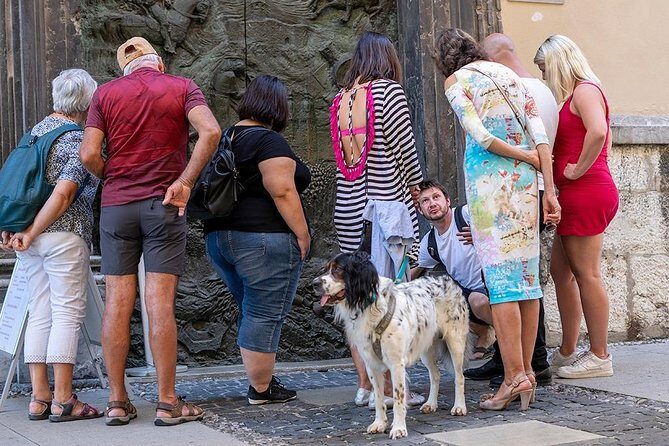
Next you’ll see the National and University Library, described on the tour as the biggest work (or major “homework”) of architect Jože Plečnik. Even if you don’t know architecture terms, the stop is designed to help you notice the symbols and logic of the design.
Why this matters on a walking tour: libraries are often treated as background scenery, but here it’s a signal of Ljubljana’s cultural priorities. The building becomes part of the city’s identity—knowledge, institutions, and long-term planning, not just old stone and nostalgia.
You’ll likely have only a few minutes at this stop, so the best move is to ask your guide what to look for. When you know where to focus—symbols, proportions, or how the building fits its surroundings—the short time feels more satisfying.
You can also read our reviews of more private tours in Ljubljana


Squares With Big Stories: French Revolution Square and Congress Square
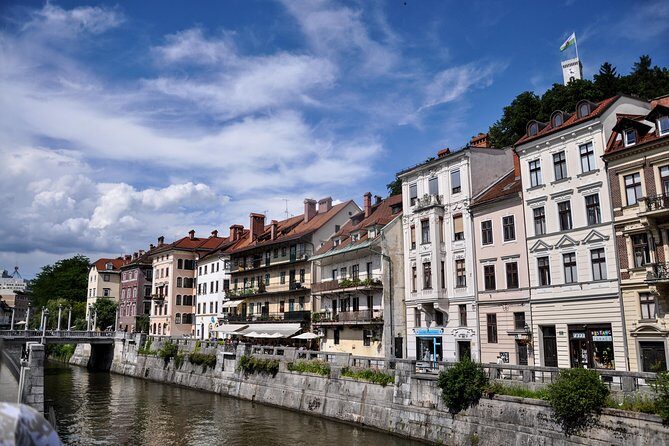
Ljubljana’s squares are small stages. You don’t just walk through them—you pick up the meaning of the names.
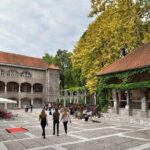
At French Revolution Square (Trg Francoske Revolucije), you’ll hear three historical threads: Teutonic knights and their monastery, Napoleonic wars and the Illyrian Provinces, and Jože Plečnik as an architect figure. The stop is short, but it gives you a timeline you can hang onto while you’re still in the square’s open space.
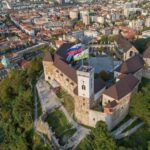
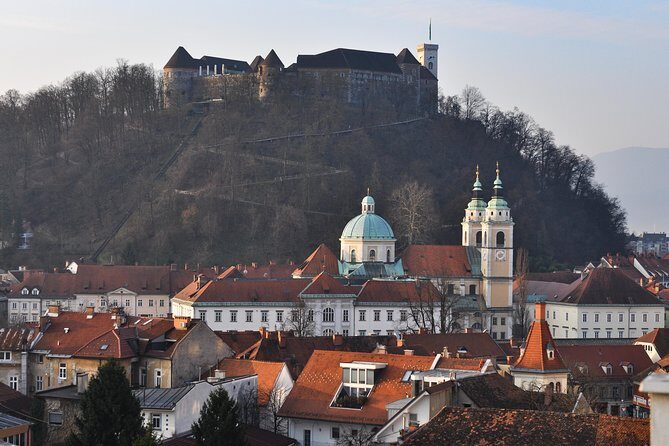
Then you arrive at Congress Square (Kongresni trg), where you’ll see major buildings and institutions and also hear why the square is named as it is. There’s also a view toward Ljubljana Castle, which is useful because it gives you a visual anchor. When you later look up at the castle from elsewhere, you’ll know why it’s such a dominating shape in the city’s setup.
If you’re the type who likes to understand where power sat—politically, culturally, spiritually—these squares help you connect the dots faster than a guidebook ever will in one afternoon.
Preseren Square and Triple Bridge: The River Crossing That Explains the City
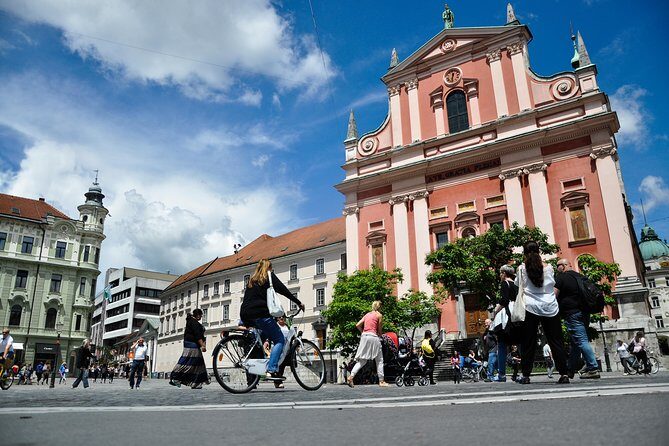
Your walk reaches Preseren Square, where you’ll get a multi-landmark view. The statue of the poet named the square is central, but you’ll also see key surrounding architecture and a sense of how the city’s main walking routes meet at the river.
Then comes Triple Bridge (Tromostovje)—one of Ljubljana’s signature landmarks and another Jože Plečnik design. The guide explains its history, purpose, and symbolism, including why it’s called triple and what that means in Plečnik’s thinking.
This is also where your attention to the river starts to matter. You’ll understand why the city treats the Ljubljanica not just as scenery, but as infrastructure for movement and identity.
A couple quick practical tips for this section:
- Slow down for photos. The bridges are close to each other, but you’ll want to angle shots
- Look for the architectural details your guide points out; that’s where the meaning lands
Franciscan Church, Butcher’s Bridge Locks, and Dragon Bridge Symbolism
The later part of the walk brings religious architecture and the city’s more playful legends together.
You’ll see the Franciscan Church (Franciskanska cerkev), known for its pink facade and a resemblance mentioned to Il Gesu church in Rome. Even if you’re not a church person, it’s an eye-catching moment and a useful contrast to the civic buildings and bridges earlier.
Next is Butcher’s Bridge, which today is also called a love bridge because of the locks people attach. You’ll hear why it got its name in the first place and what the grotesque statues on it mean. This stop tends to make people look at the river crossing differently—less like a novelty bridge, more like a story machine made of stone and custom.
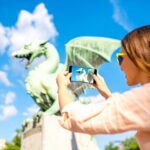
Finally, you’ll reach Dragon Bridge (Zmajski Most), one of Ljubljana’s most recognizable Art Nouveau landmarks. Your guide explains why a dragon is used as a symbol for the city. It’s a strong closing note: you finish with a landmark that feels both local and iconic.
What $78.64 Buys You in a Private Old Town Walk
At $78.64 per person for about 2 hours, you’re paying for three things that matter in a compact historic center.
First, you’re paying for someone to connect the landmarks into a coherent story. Ljubljana’s best details are often the ones you’d otherwise walk past—door sculptures, civic building roles, and the specific reason a bridge earned its name.
Second, you’re paying for the private format. You’re not competing with other group questions, so the guide can respond to your pace and interests. Even the practical moments—timing adjustments, how the guide handles questions, and keeping the walk moving smoothly—add up fast when you’re spending only two hours in the center.
Third, you’re paying for the “value of access,” which is mostly about experience quality, not about buying many attractions. For example:
- The Central Market stop includes a ticket
- The cathedral ticket is not included
- Many stops are free, so you’re not hit with a pile of fees during the walk
The main trade-off is time. Since it’s two hours, you’re not expecting long museum-style viewing. If that’s your style, you might want to plan additional time on your own after the tour, using the guide’s recommendations as your starting point.
Who Should Book This Tour (and Who Might Skip It)
This private walk is a great fit if you:
- Want an Old Town orientation in a short window
- Enjoy history that’s tied to real street-level details—bridges, civic buildings, and church art
- Like asking questions and getting answers without rushing your group
- Care about architecture, especially Jože Plečnik’s influence around the river area
You might consider a different approach if you:
- Want lots of long indoor time at major sites
- Prefer a tour where nearly every stop is a ticketed attraction (this walk mixes included and free points, plus at least one notable ticket not included)
If you’re visiting Ljubljana for the first time, this walk often acts like the best kind of shortcut: you learn enough to enjoy everything else you do later.
Should You Book This Ljubljana Private Walking Tour?
If you’re the type who wants your city to make sense, I’d book it. The mix of culture, architecture, and practical daily-life context gives you a foundation fast, and the private format helps you shape the pace. Plan for short stops and one site where you may pay separately, then use the rest of the day to revisit what grabbed you most—especially the bridges and the cathedral door details.
FAQ
How long is the private walking tour?
The tour is scheduled for about 2 hours.
What does the tour cost per person?
The price is listed as $78.64 per person.
Is this tour private or group-based?
It’s a private tour. Only your group participates.
Is the tour offered in English?
Yes, it’s offered in English.
Where does the tour start and where does it end?
It starts at the Mouse Fountain in Ljubljana’s Center District and ends at Prešernov trg 1.
Are entrance tickets included for stops?
The Central Market stop includes an admission ticket. The Cathedral of St. Nicholas stop says admission is not included, and several other stops are marked as free.